W Studio Lab
In this reel
01 Brooklyn brownstones · 02 Pratt Main Building · 03 Lane Stadium
04 FuXi, seven days · 05 Inspection review canvas · 06 Ontology graph
Photos: Santeri / Unsplash; Bmzuckerman, CC BY 4.0; User:B, CC BY-SA 4.0 (Wikimedia Commons)
Reel & photo credits ↓
AI-Native · Full-Stack · Building Testing & Inspection

AI product × full-stack
delivery × industry

Bringing AI systems into high-accountability fields such as building inspection and testing — requirements, prototype, code, deployment and operations, end to end by one person. My background connects atmospheric science, urban planning and GIS; AI-assisted engineering brings that domain judgement into working systems.

Given a product, a parameter and a standard version, find the sampling rule.
Two master’s degreesMURP, Virginia Tech (USA)Four years studying and working in EnglishSenior Engineer, 20241 granted invention patent

Selected work

From an idea to something you can open and verify.

01 / Ontology · Semantic base

One verifiable semantics
for a fragmented business.

Ontology + versioned identity rules + SHACL gate + frozen evidence + controlled read-only MCP, with an Ontop OBDA virtual knowledge graph as the control. R&D trial.

16 classes / 34 properties / 11,123 triples · Conforms: True
Read the case ↗
Ontology relation graph: product → standard → sampling rule (redrawn from prototype data)
02 / Inspection · Evidence chain

From raw image to deliverable,
with the evidence intact.

HEIC → three-tier OSS images → vision-LLM pre-annotation → human review → Word. Curtain wall and foundation pit share one chain; the report draws only confirmed boxes.

714 originals · 83.6 s · peak memory 4.3 G → 821 MB
Read the case ↗
Inspection review canvas (identifiers pixelated)
03 / AI weather · independent research / 2026.03

One model run,
weather maps worth reading closely.

GFS initial state → FuXi (NVIDIA Earth-2) → 7-day, 168-hour multi-variable charts; a single retrospective case, about 24 minutes of pure inference and 34 end to end. Research figures, not a forecast service.

Seven days, six variables, full configuration ↗
FuXi, three variables over seven days: 700 hPa RH and wind, 850 hPa wind speed, 2 m temperature and SLP (Apr02 20CST, +108h)
04 / Method

ANPE: making AI coding agents
manageable.

00-pre → 00 → 01 → 02 → 02b → 03 → 04 → 05 → 00b
GATE
The execution spec (03) is the only licence to build; new facts change the design first.
MEASURE
Human intervention counted in two tiers: H0 mechanical / H0b substantive.
HANDOFF
Agents hand over through dated, directional files — not chat.

Capabilities

Each one lands on an artifact you can open and check.

Ontology & semantic layer

OWL / SKOS / SHACL; versioned identity rules; answers replay with their evidence.

Evidence chain & documents

Raw image → review → Word; only confirmed boxes drawn, defects renumbered per facade.

AI weather inference

FuXi / Earth-2 inference and charting from a GFS initial state, single case.

Spec-driven agent engineering

Gates, measurement, handoff; the execution spec is the only licence to build.

Cloud servers & Linux ops

More than ten systems run single-handed; every release can roll back.

Building inspection & testing

From industry need and prototype to production.

Through-line

Virginia Tech (USA) · MURP, Urban and Regional PlanningNUIST · M.S. Atmospheric Science

Spatial data, physical processes, then meaning and evidence: a connected practice of turning domain knowledge into useful systems.

2023 —

AI-native product & engineering

A listed company: AI applications for building inspection and testing; an auditable AI core; a spec-driven multi-agent method.

2018 — 2022

GIS platforms & databases

A Shanghai university: first lead on nearly ten GIS database and online GIS platform projects, about half hands-on; one granted invention patent.

2016 — 2018

Numerical modelling on supercomputers

A Hong Kong university: built and tuned WRF / WRF-Chem / CMAQ on an HPC platform; SCI paper.

2014 — 2016

MURP, Virginia Tech (USA)

Urban data analytics and spatial planning; an all-English environment.

2008 — 2014

Forecast operations & decision data

The meteorological bureau of a provincial capital: a city disaster-prevention plan and an urban waterlogging warning system.

2001 — 2008

B.S. GIS · M.S. Atmospheric Science

An information-science start; numerical modelling and scientific computing at master’s level.

TITLE
Senior Engineer (construction engineering · S&T management · technology development), Jiangsu, 2024
PATENT
Granted invention patent ZL202011341719.3
AWARD
Jiangsu Construction S&T Achievement Award, 2nd prize, 2026
AWARD
Jiangsu Society of Civil Engineering & Architecture S&T Award, 2nd prize, 2025
AWARD
Shanghai Science & Technology Progress Award, 2nd prize, 2020
PAPER
Environmental Pollution, 2018 (SCI)
EDU
MURP, Virginia Tech · M.S. Atmospheric Science · B.S. GIS
LANG
English: professional reading and writing; four years in an all-English environment
About
From weather balloons to Pangu-Weather, from GIS surveys of historic buildings to AI charts, from supercomputing rooms to cloud GPUs.

I work across atmospheric science, urban planning, GIS and industry AI. The connection is practical: understand the domain, define the product, and use AI-assisted engineering to deliver a result whose evidence can be checked.

Off hours

Three things I keep coming back to.

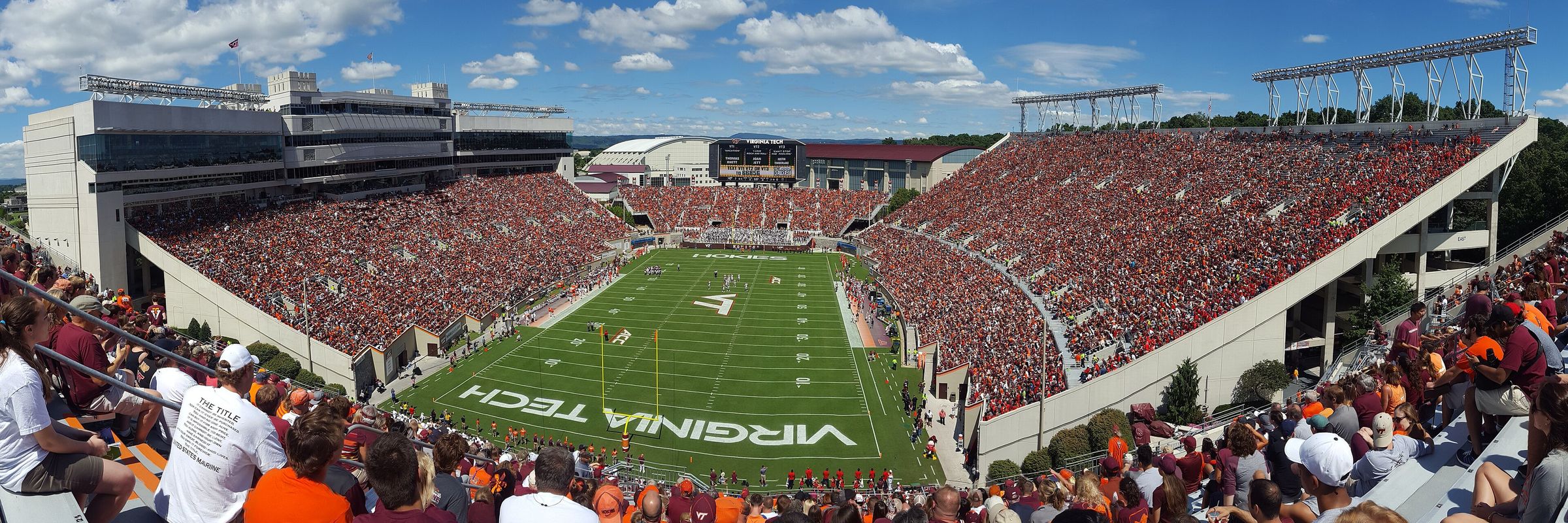
Lane Stadium before kickoff (2016)
01 · Blacksburg

Saturdays at Lane Stadium

For two years in Blacksburg, Saturday at Lane Stadium was the loudest place in town: before kickoff the whole stadium jumps to “Enter Sandman”, sixty-odd thousand people shaking the stands. Twelve or thirteen hours away now, I still check the Hokies score first thing. Go Hokies.

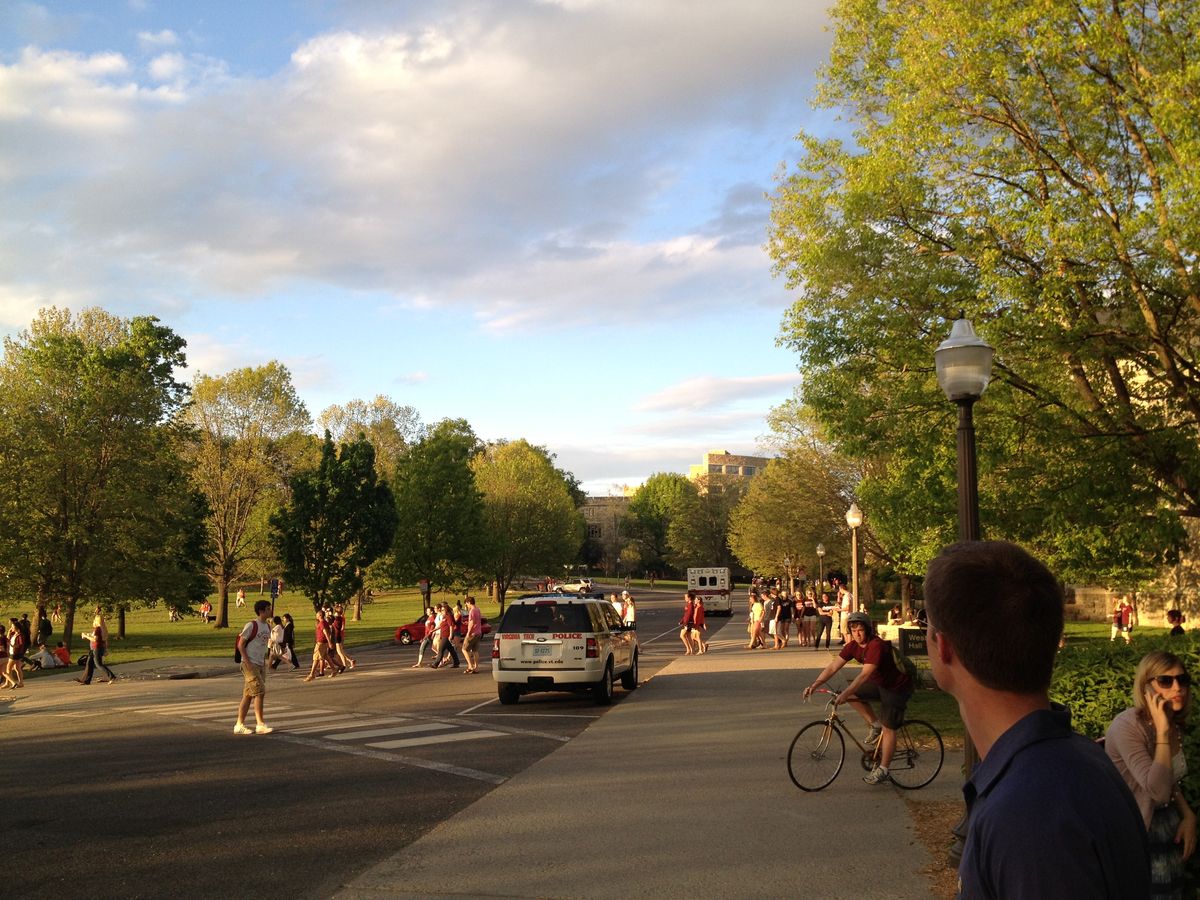
Photos: Lane Stadium panorama (2016), User:B, CC BY-SA 4.0; The Drillfield, towards Newman Library, Eric T Gunther, CC BY 3.0. Wikimedia Commons, resized and cropped.

The Drillfield at Virginia Tech
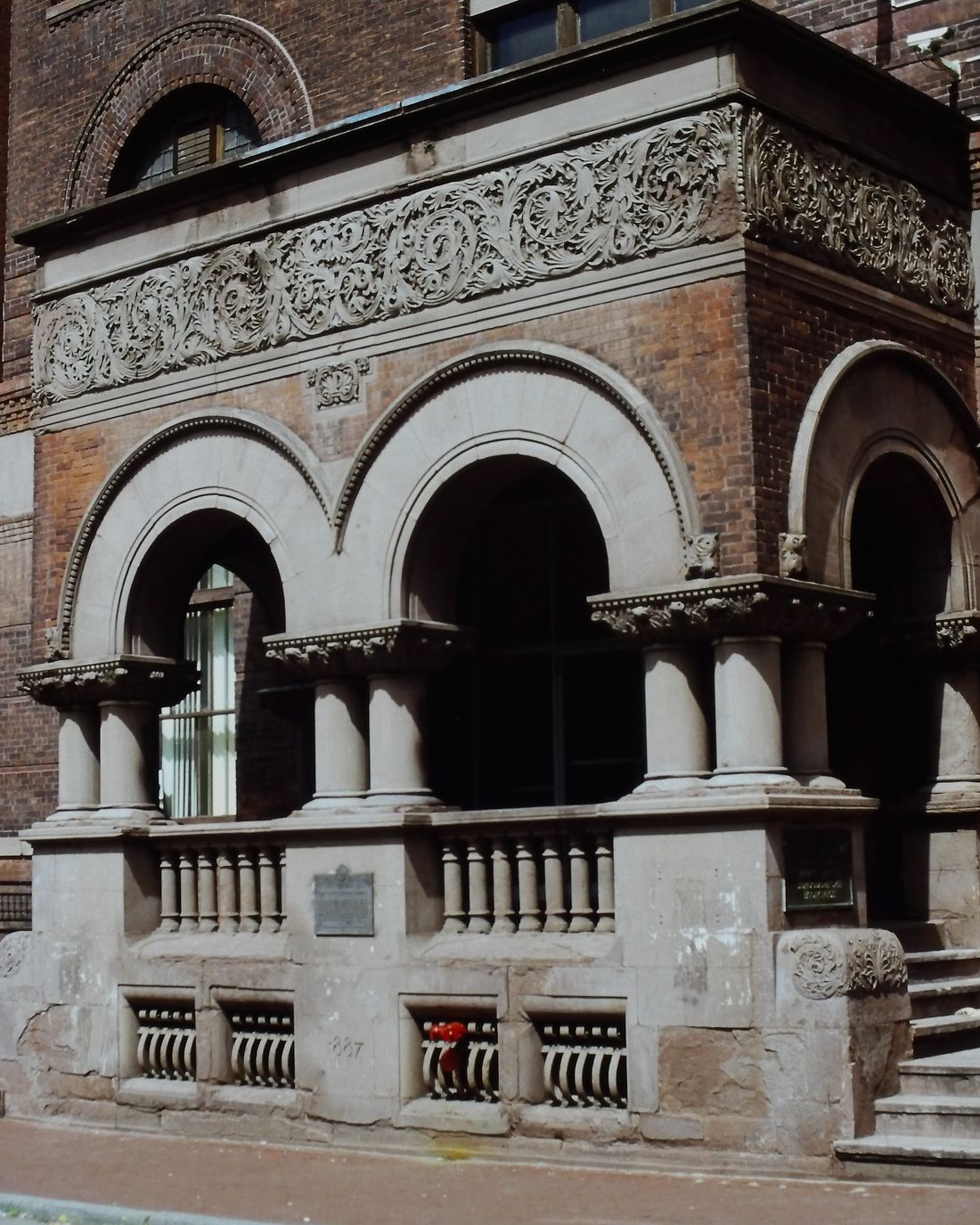
Brick arches of Pratt Institute’s Main Building
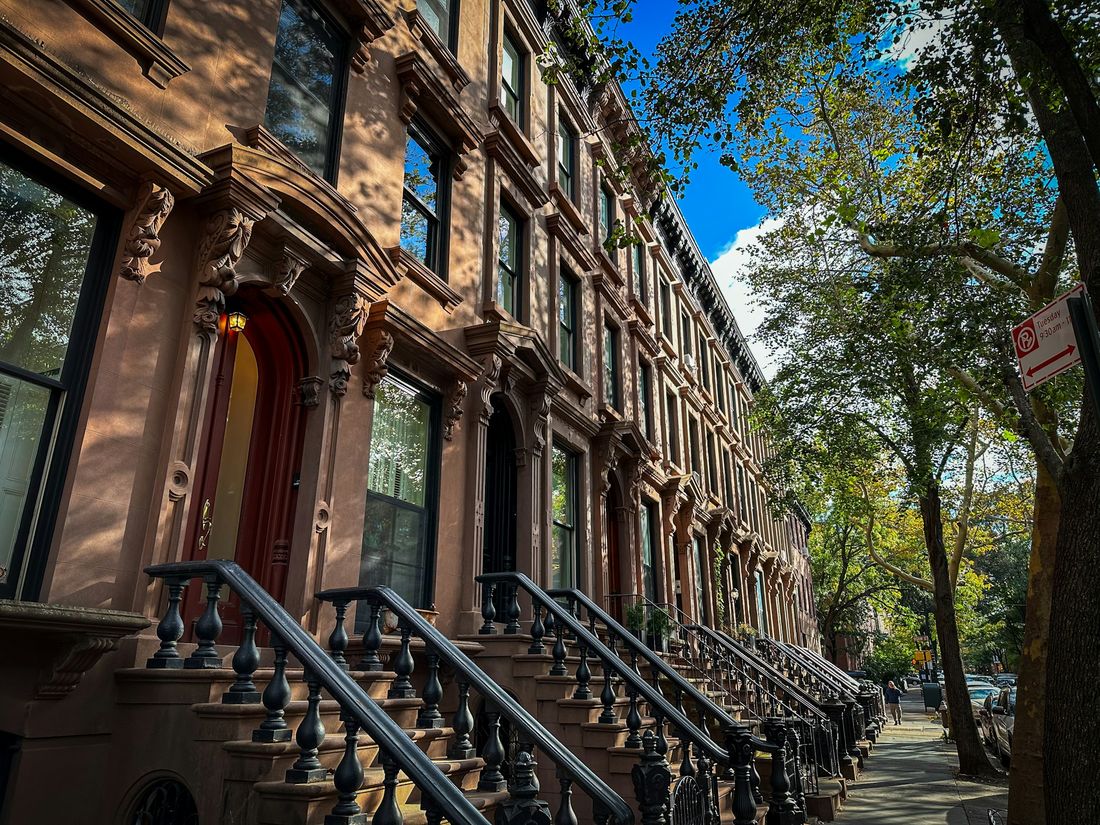
A row of Brooklyn brownstones
02 · Brooklyn

Almost Brooklyn

I was admitted to Pratt and nearly moved to Brooklyn. I visited twice that autumn and winter: red brick, blue sky, golden leaves. Out of the subway there was a busy street market; the further in you walked, the quieter it got — lively, but not Manhattan-loud, and not Blacksburg-quiet either. In the end I stayed in Blacksburg. The yellow on this site is Pratt’s yellow.

Photos: Pratt Institute Main Building, Bmzuckerman, CC BY 4.0 (Wikimedia Commons, resized and cropped); Brooklyn brownstones, Santeri / Unsplash.

03 · History & geography

Managed in numbers

A history-and-geography buff; Ray Huang is my favourite. He argued that one of modern China’s knots was that it could not yet be “managed in numbers”. I have carried that line for years, and most of what I do seems to push the same way: turning what lives in a domain into something that can be counted and traced.

Because I loved it, I spent five years on architectural heritage conservation at a Shanghai university — GIS archives of historic buildings, survey-data management, risk assessment — and wrote some of it up (in Chinese):

  • A historical examination of American urban renaissance: the case of Pittsburgh
    Pan Wenzhuo, Cao Yongkang · Chinese & Overseas Architecture, 2019(4) · find ↗
  • Pittsburgh’s urban renaissance and its spatial meaning
    Pan Wenzhuo · Chinese & Overseas Architecture, 2020(6):31–34 · DOI 10.19940/j.cnki.1008-0422.2020.06.007 · find ↗
  • Cultural-heritage risk assessment: a GIS and AHP vulnerability analysis of historic buildings in East Siwenli, Shanghai
    Pan Wenzhuo, Wang Zibing, Gu Lei, Liu Tiening, Cao Yongkang · Chinese & Overseas Architecture, 2025 · find ↗

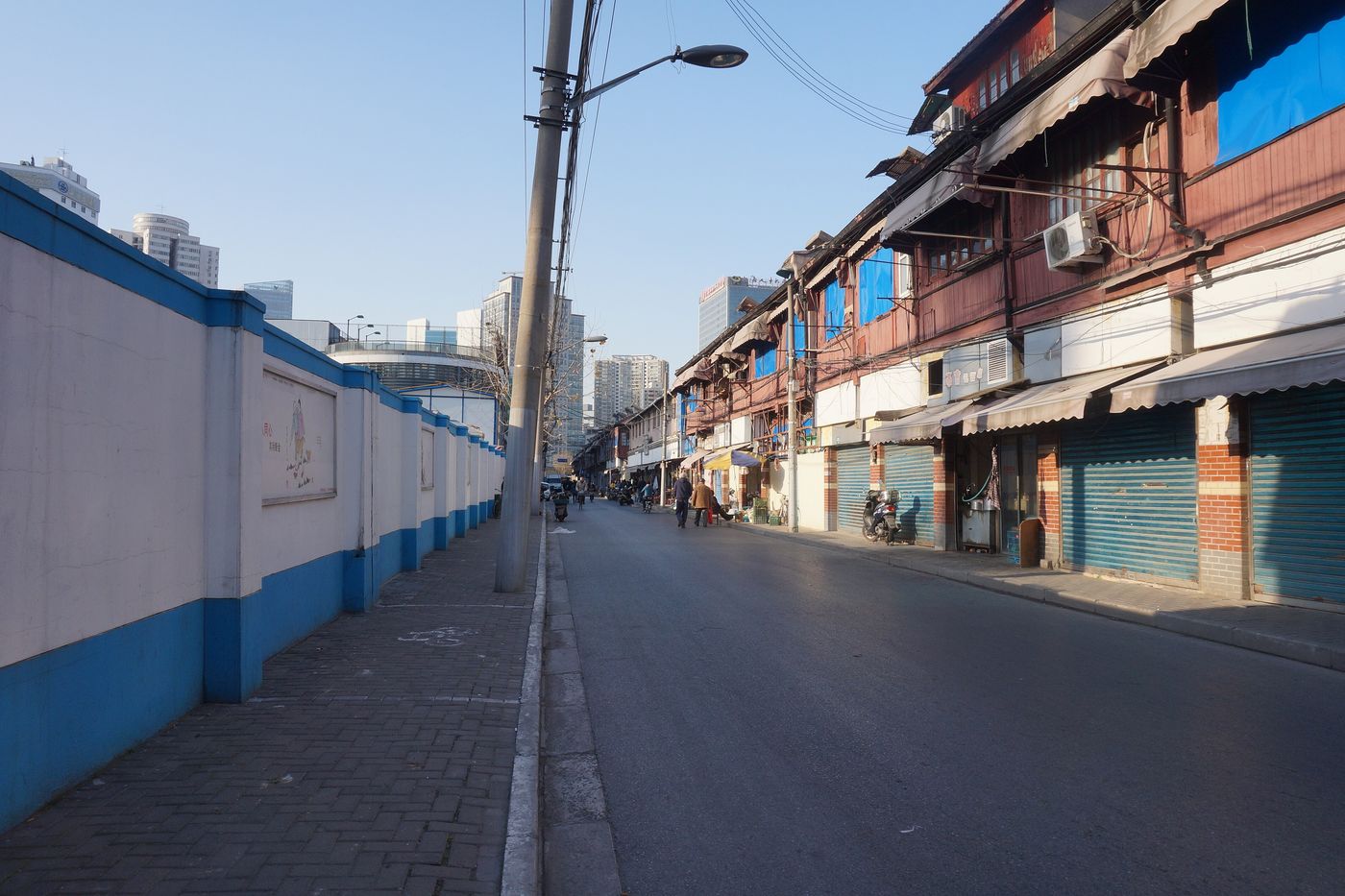
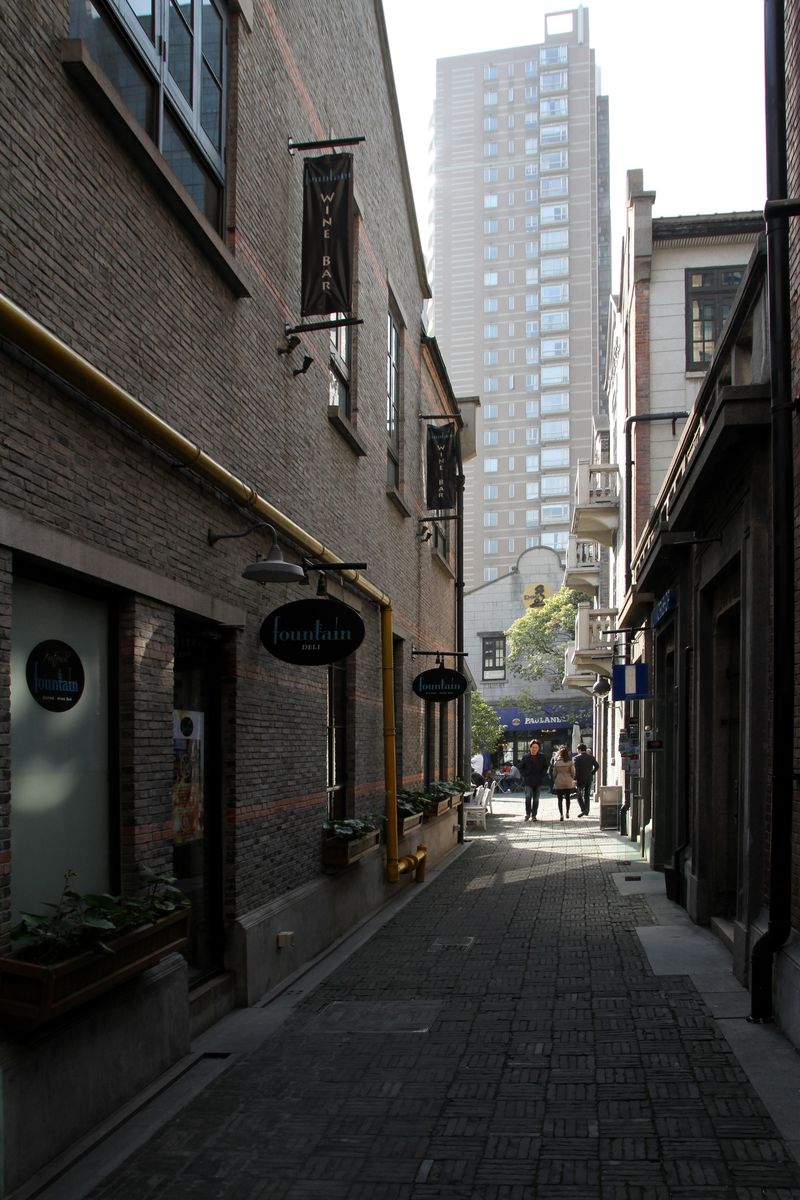
Photos: East Siwenli, along Datian Road, Livelikerw, CC BY-SA 3.0; A shikumen lane in Shanghai (2012), Gerd Eichmann, CC BY-SA 4.0. Wikimedia Commons, resized and cropped.

East Siwenli along Datian Road
A shikumen lane in Shanghai